
Beaches & lagoons
Not all Mauritius beaches are the same and not all of them are public, not all of them are safe to swim from, and a few of the famous ones are backed by a hotel wall with no shade and nowhere to park. This is the honest version, with a drive time and a bus answer for every one.
Every coast of this island has beaches and every coast has a completely different character. The north is sheltered and shallow, the west has the sunsets and the calmest water, the east is the postcard white sand with wind behind it, and the south has no protecting reef at all and is the one place you should not swim. Ranking the Mauritius beaches against each other misses that point entirely.
Which of the Mauritius beaches suits you comes down to four things: whether there is shade, whether the lagoon is swimmable that week, whether you can get there without a car, and whether the beach is public in the first place. We answer all four for each one below.
Every beach here is legally public, because in Mauritius all of them are. What varies is whether there is a way in that is not through a hotel lobby, and whether there is anywhere to leave a car when you get there. On that measure the Mauritius beaches split fairly evenly.
Read this bit and you can skip most of the article. The four questions that actually decide which of the Mauritius beaches you should be on:
Do you want shade? Filao and casuarina trees back the northern and eastern Mauritius beaches. Flic en Flac has a long strip of them. Le Morne and La Cambuse have almost none. If you are out between eleven and three with children, shade is not a luxury here.
Do you want to swim or to look? The north and west lagoons are shallow, warm and calm almost every day. The east is beautiful and often choppy from June to September. The south is spectacular and dangerous.
Are you driving? Roughly half of the best beaches in Mauritius are on a bus route and half are not. We say which for each.
What time of year? The trade winds from June to September make the eastern Mauritius beaches uncomfortable and leave the west coast glassy. In the summer months it evens out.
The most developed coast and the easiest to reach without a car. The reef sits close in, the water is shallow a long way out, and these are the Mauritius beaches to pick if you are travelling with small children.
Consistently named the best of all the Mauritius beaches and it earns it. Three kilometres of white sand, filao trees for shade the whole length, and a lagoon so shallow and calm you can walk out fifty metres. Public access is easy, there is parking, and the snorkelling straight off the beach is genuinely good.
Sunset is the other reason to come, and few Mauritius beaches do it better. It faces west and the light in the last hour is the best on this coast.
The longest beach in the north, a wide arc of sand between Trou aux Biches and Grand Baie. Busier at weekends with local families, which is part of its charm. Food vans, casuarina shade, and enough space that it never feels full on a weekday.
Small, sheltered and deeper than its neighbours, which makes Pereybere beach the best swimming beach in the north for adults who want to actually swim rather than paddle. Shops and restaurants are a minute back from the sand. It gets crowded because it is short, so come early.
A small crescent tucked at the north end of Grand Baie, and the one proper Grand Baie beach for swimming. The bay itself is a working harbour full of boats, so this is where you go for sand. Quiet in the morning, busy by noon.
The northern tip, with the red roofed church and Coin de Mire island offshore. The beach is small and rocky in places and it is not really a swimming beach. You come for the view and the photograph, which is a perfectly good reason.
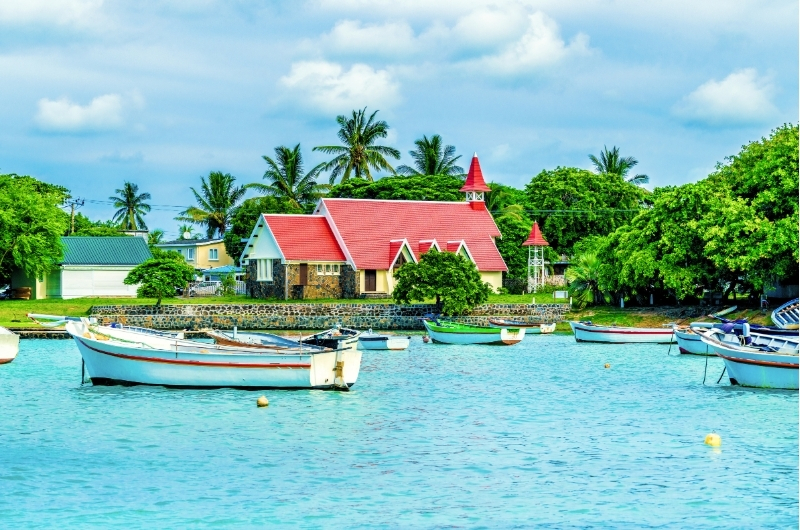
The sunset coast, and the Mauritius beaches with the most reliably calm water because the mountains block the trade winds. In the windy months from June to September the western Mauritius beaches are where you go when the east is unusable.
The longest of the public Mauritius beaches, eight kilometres of it, with a continuous belt of casuarina trees behind. The lagoon is wide, shallow and calm, there is parking all along it, and it never feels crowded because there is simply so much of it. Sunday is a family occasion here and worth seeing.
The snorkelling improves as you go north towards Wolmar. The southern end near the public beach car parks is sandier and better for swimming.
The surf beach, and the only one on the island with a real wave. A river mouth meets the sea here so the water is a shade darker and the sand is coarser. Dolphins come into the bay most mornings, which is why the boats leave from here. Swimming is fine but the current near the river mouth deserves respect.
The most dramatic setting of any of the Mauritius beaches: white sand, a flat turquoise lagoon and the basalt monolith of Le Morne Brabant directly behind you. The public stretch sits between the resorts and is properly signposted.
It is also the kitesurfing centre of the island. From June to September the far end of the lagoon is full of kites, which is either the attraction or the reason to go somewhere else.
Quieter than Flic en Flac and mostly local. A lighthouse on the headland, a small sandy bay and rock pools either side. Not a resort beach, which is exactly the point.
The whitest sand and the widest lagoon, and the Mauritius beaches that fill most of the brochures. The catch is the wind: from June to September the south east trades blow straight onto this shore. In the summer months these are the finest beaches in Mauritius by some distance.
One of the widest Mauritius beaches, with fine white sand and a lagoon that runs out for hundreds of metres before it reaches the reef. Belle Mare beach has good filao shade, plenty of parking and enough length to find your own patch even in high season.
Come in the morning. The wind usually picks up after eleven from June onwards.
Belle Mare with fewer people. The same white sand and the same lagoon a couple of kilometres south, without the car parks. If Belle Mare looks busy, drive on for five minutes.
An island off the east coast reached by boat from Trou d’Eau Douce, and the most photographed sandbar in the country. Ile aux Cerfs beach is genuinely as good as it looks, and it is genuinely busy. Catamaran trips usually include lunch and a stop at the Grande Riviere Sud Est waterfall.
Go on a weekday. Weekends bring local families and the main beach fills by eleven.
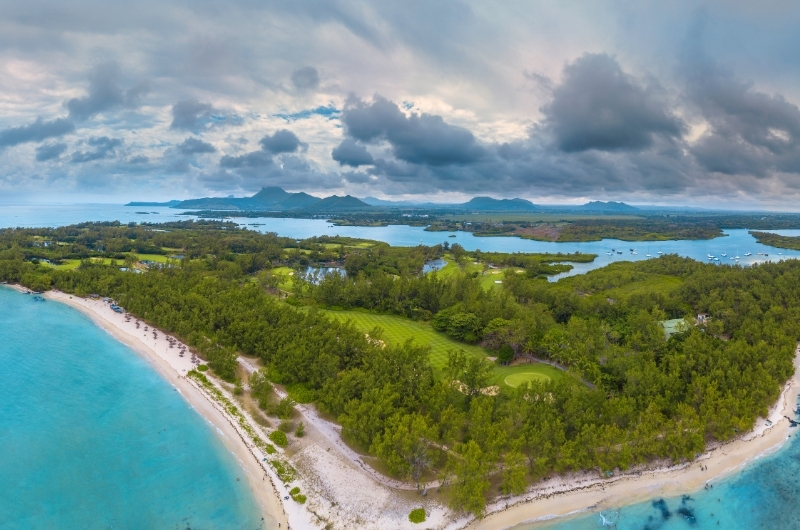
The wildest coast, and the Mauritius beaches that need the clearest warning. Part of the south sits behind a reef and is superb. Part of it has no reef at all, and people drown there.
A protected marine park with the clearest water on the island, ten minutes from the airport. The coral starts a short swim from the sand and glass bottom boats run all day. Of all the Mauritius beaches this is the best one for snorkelling straight off the beach, and the obvious first or last stop of a trip.
A wild, undeveloped stretch of sand a few minutes from the runway, backed by dunes rather than hotels. There is no reef directly offshore, the water is deeper and the current is real. Beautiful to walk, and swim only when the sea is flat and never alone.
Gris Gris, near Souillac, is the one stretch of Mauritius with no protecting reef. The Indian Ocean hits the cliffs directly and the surf is enormous. Gris Gris beach appears on plenty of lists and it is worth the drive for the view, but you cannot swim there and people who try get into serious trouble. Stand on the grass, take the photograph, do not go in.
All fourteen Mauritius beaches in one place. Drive times are from the airport in normal traffic.
| Beach | Coast | From airport | Swimming | Shade | By bus |
|---|---|---|---|---|---|
| Trou aux Biches | North | 1 hr 5 | Excellent | Plenty | Yes |
| Mont Choisy | North | 1 hr 10 | Excellent | Plenty | Yes |
| Pereybere | North | 1 hr 15 | Excellent | Some | Yes |
| La Cuvette, Grand Baie | North | 1 hr 10 | Good | Some | Yes |
| Cap Malheureux | North | 1 hr 20 | Fair | Little | Yes |
| Flic en Flac | West | 50 min | Excellent | Plenty | Yes |
| Tamarin Bay | West | 55 min | Fair | Little | Yes |
| Le Morne | West | 60 min | Excellent | Little | Difficult |
| Albion | West | 55 min | Good | Some | Yes |
| Belle Mare | East | 45 min | Excellent | Plenty | Yes |
| Palmar | East | 45 min | Excellent | Some | Yes |
| Ile aux Cerfs | East | 45 min plus boat | Excellent | Some | Difficult |
| Blue Bay | South | 10 min | Excellent | Plenty | Yes |
| La Cambuse | South | 10 min | Caution | Little | Difficult |
Swipe to see the full table
The rule on Mauritius beaches confuses almost every first time visitor, so it is worth stating plainly.
Every beach in Mauritius is public. The law reserves the shoreline for public use, and no hotel owns the sand in front of it. You are entitled to walk the length of any beach on this list, including the stretches in front of the resorts.
What hotels do own is everything above the high water line: the loungers, the umbrellas, the watersports centre and the bar. Those are for guests. Nobody will stop you walking past. Somebody will stop you taking a sunbed.
The practical limit is access. On some resort stretches the only road in runs through hotel grounds, so the sand is legally yours and physically awkward to reach. Public access points are signposted and every beach we have listed has one.
Mauritius beaches are safe in a way that surprises people from Australia or South Africa. There is no shark problem inside the lagoon, no jellyfish season worth planning around, and the reef takes the force out of the ocean. The risks that do exist are specific and avoidable.
Reef passes. Where the reef has a gap, water that came over the top on the swell has to get back out, and it does so through that gap at speed. This is the one genuine current risk in the lagoon. Stay away from the visible breaks in the white line offshore.
The unreefed south. Gris Gris, Riviere des Galets and parts of La Cambuse have no reef. Treat them as viewpoints rather than beaches.
Stonefish and sea urchins. Rare but real on rocky and seagrass bottoms. A pair of reef shoes costs very little locally and removes the problem entirely. Wear them at Albion, Cap Malheureux and anywhere the bottom is not clean sand.
Sun. We are in the tropics at 20 degrees south. The reflected light off a white sand lagoon burns people who thought they were being careful. Shade between eleven and three.
Flags. Public beaches with lifeguards fly them in the usual way. Red means out of the water, and it is not advisory.
Ten of the fourteen Mauritius beaches are on a bus route, which is more than most guides admit. Buses are cheap, run along both coasts and the main towns, and stop in the early evening. What they will not do is take you across the island: a north to east journey means changing in Port Louis and losing most of a morning.
If you are staying in one place and using the Mauritius beaches near you, buses are fine. If you want to see the best beaches in Mauritius on more than one coast, you need a car or a driver.
We run fixed price transfers to every one of these Mauritius beaches and private day tours that take in two or three on a coast. Rates for every route are on our Mauritius taxi prices page. If you would rather drive yourself, our car rental page covers what to check first, and the attractions inland are in our what to visit in Mauritius guide.
Trou aux Biches in the north, for most people. It has the shade, the calm shallow lagoon, easy public access, parking and good snorkelling straight off the sand. Flic en Flac is the best of the Mauritius beaches if you want space, and Belle Mare if you want the whitest sand.
Yes. All Mauritius beaches are public. Mauritian law reserves the shoreline and no hotel owns the sand. Hotel loungers, umbrellas and bars are for guests, but you may walk any beach on the island. What varies is whether there is a public road in.
Almost all of the northern, western and eastern Mauritius beaches, because they sit behind a reef. Trou aux Biches, Mont Choisy, Pereybere, Flic en Flac, Belle Mare and Blue Bay are reliably calm. Avoid the unreefed south coast at Gris Gris entirely, and treat La Cambuse with care.
Blue Bay Marine Park, ten minutes from the airport, where the coral starts a short swim from the sand. Trou aux Biches is the best in the north. Our snorkelling guide covers the rest.
November to April is the best time for the Mauritius beaches, with water at around 28 degrees. May to October is dry and bright with cooler water and strong trade winds on the east coast. Our best time to visit Mauritius guide breaks it down month by month.
Ten of the fourteen Mauritius beaches here are on a bus route, including Trou aux Biches, Mont Choisy, Pereybere, Flic en Flac, Belle Mare and Blue Bay. Le Morne, Ile aux Cerfs and La Cambuse are not realistically reachable without a car or a driver.
Not on the Mauritius beaches inside the lagoon, in any way worth worrying about. The reef keeps large marine life out and there is no jellyfish season to plan around. The real hazards are reef pass currents, sea urchins on rocky bottoms and the sun.
Blue Bay and La Cambuse are the closest Mauritius beaches to the airport, both about ten minutes away. Blue Bay is the one to choose: it is a protected marine park with shade, facilities and excellent swimming, which makes it the ideal stop on an arrival or departure day.
The best beaches in Mauritius are spread across four coasts and a bus will only ever show you one of them. A private day tour takes in two or three on the same coast, with hotel pickup and a driver who knows which car park has shade.
See private day toursAbout these figures
Drive times are our own, measured on these routes in normal traffic. Swimming and shade ratings reflect a typical day and any lagoon can change in strong wind. Public access to the shoreline is guaranteed under Mauritian law. Marine park information for Blue Bay comes from the Mauritian Wildlife Foundation. Always follow the beach flags where lifeguards are on duty.
VISIT THE BEST BEACHES BY BOAT
Skip the crowds. Île aux Cerfs is only reachable by boat — join our private catamaran trip with snorkelling and lunch included.
Book the Catamaran Trip →