
Weather & seasons
The best time to visit Mauritius is not one month, which is the honest and slightly unhelpful answer. What changes month to month is the sea temperature, the wind, the rain and the price of a room, and those four things decide whether the holiday you booked is the holiday you get.
The best time to visit Mauritius is October to April if you want warm water and long evenings, and May to September if you want dry, bright days, cool nights and noticeably lower prices. Both are good. The best time to visit Mauritius is simply whichever of those two holidays you came for.
That split is the whole of it, and most guides stop there. The useful detail sits underneath: the sea is at its warmest in February and its coolest in September, and those two months are five degrees apart in the water even though the air temperature only moves by about six. If you are coming to swim and snorkel, sea temperature matters more than air temperature, and almost nobody publishes it.
We meet flights every day of the year, so we see what the island is actually doing rather than what the averages say. The figures below are the honest ones, including the months we would gently steer you away from.
Work out which of the four columns below matters most to you, then read down it. That is genuinely the fastest way to settle the best time to visit Mauritius for your trip. There is no single best time to visit Mauritius for everyone, only for you.
| Month | Air (C) | Sea (C) | Rainfall | Crowds | The verdict |
|---|---|---|---|---|---|
| January | 26 to 30 | 27.7 | Moderate | High | Hot and humid, cyclone season |
| February | 26 to 30 | 28.2 | Moderate | High | Warmest sea of the year |
| March | 26 to 29 | 28.3 | Moderate | Medium | Warm sea, rain easing off |
| April | 24 to 28 | 27.9 | Low | Medium | One of the two best all rounders |
| May | 22 to 26 | 26.6 | Very low | Low | Dry season begins, excellent value |
| June | 20 to 24 | 25.2 | Very low | Low | Cool, breezy, very quiet |
| July | 19 to 23 | 24.2 | Very low | Medium | Coolest month, whales offshore |
| August | 19 to 23 | 23.9 | Very low | Medium | Windiest, best for kitesurfing |
| September | 21 to 25 | 23.7 | Low | Low | Warming up, coolest sea, very quiet |
| October | 23 to 27 | 24.4 | Low | Medium | The other best all rounder |
| November | 24 to 28 | 25.6 | Low to moderate | Medium | Warm, ahead of the crowds |
| December | 25 to 29 | 27.0 | Moderate | Very high | Warm, festive, expensive |
Swipe to see the full table
If you want one month and no further reading, take April or October. They sit on the hinge between the seasons: the rain has stopped or has not started, the sea is still warm enough to stay in for an hour, and the island is not full. Every local we know says the same thing when asked what the best time to visit Mauritius is, and they are not saying it to be diplomatic.
Any answer to the best time to visit Mauritius starts here. The island sits far enough south to have real seasons, which surprises people who expect a flat tropical year. They are inverted relative to Europe: the summer here runs through the European winter.
Hot, humid, green and alive. Daytime air sits in the high twenties and the sea climbs past 27 degrees, which is the temperature at which you stop noticing you are in water at all. Rain arrives in short, heavy afternoon bursts rather than grey all day drizzle, and the island turns properly green because of it. Sugar cane grows to head height. Mangoes and lychees are everywhere in December and January and they cost almost nothing at a roadside stall.
The trade off is humidity. February afternoons on the coast are genuinely sticky, and if you are walking Le Morne or hiking in Black River Gorges you will want to be finished by ten in the morning. This is also the cyclone window, covered further down.
Dry, bright and comfortable. Days run in the low to mid twenties, nights drop to around eighteen, and the humidity disappears. This is the season for anything that involves walking: the national park, the crater rim at Trou aux Cerfs, the seven waterfalls at Tamarind. The air is clear enough that you can see Reunion from the south coast on a good morning.
The trade off is the water and the wind. The sea bottoms out at just under 24 degrees in September, which is swimmable but noticeably cool for the first minute, and the south east trade winds blow hard on the east and south coasts from June through August. That wind is a problem for a lazy beach day and a gift if you kitesurf. For anyone who cares more about wind than water, the best time to visit Mauritius is squarely in this half of the year.
The island has two climates at once. The east coast is windier and wetter than the west, the central plateau around Curepipe is several degrees cooler and much rainier than either coast, and the north west around Grand Baie is the driest, most sheltered corner of the island. A wet forecast for Mauritius often means a wet plateau and a perfectly dry beach.
If you have come for one specific thing, the calendar narrows quickly. This is the best time to visit Mauritius broken down by what you actually plan to do. Pick the row, not the month.
| If you came for | Best months | Why |
|---|---|---|
| Swimming and lazy beach days | December to April | Sea above 27 degrees, light winds on the west coast |
| Snorkelling and diving | November to April | Warmest water and the best underwater visibility |
| Kitesurfing and windsurfing | June to September | Reliable south east trade winds, strongest in August |
| Hiking and the national park | May to October | Dry trails, low humidity, clear long views |
| Dolphins off the west coast | All year | Resident spinner pods, calmest sea early morning |
| Humpback whales | July to October | Migration season off the west and south coasts |
| Big game fishing | November to April | Marlin and tuna run through the warm months |
| Golf | May to October | Dry, cool and far more comfortable to walk |
| Lowest prices | May, June, September | Outside every school holiday in every market |
Swipe to see the full table
The two that trip people up when working out the best time to visit Mauritius are diving and hiking, because they pull in opposite directions. Underwater visibility is at its best in the warm months when the sea is calm and clear, and the trails are at their best in the dry months when the ground is firm and the views are open. If you want both in one trip, April and November are the compromise, and they are good compromises rather than bad ones.
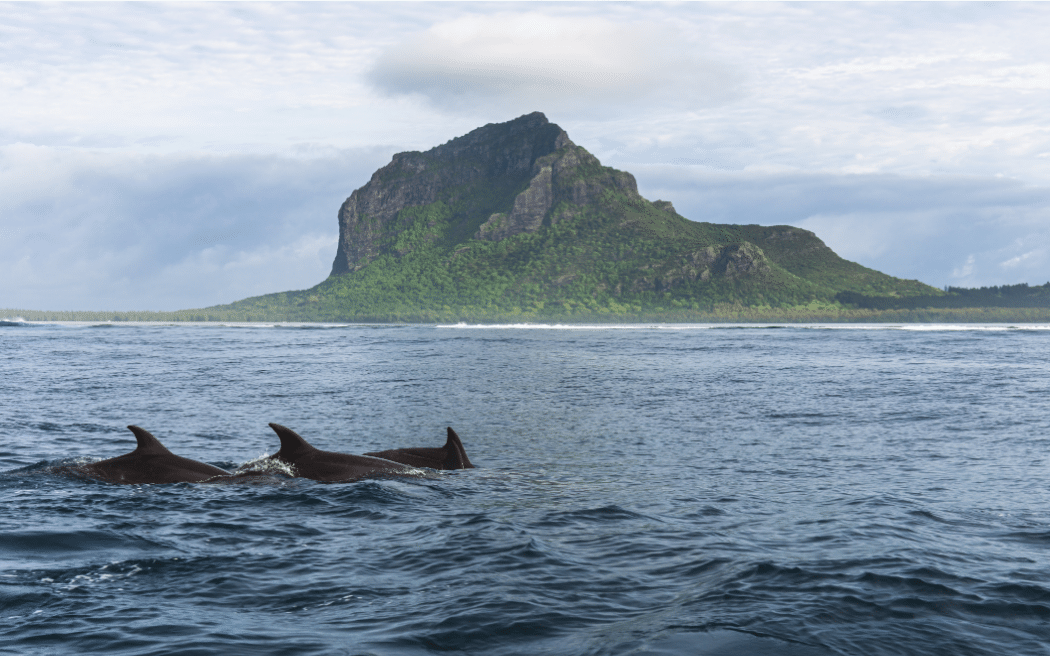
The official cyclone season runs from November to April, peaking in January and February. This is the part of the best time to visit Mauritius question that gets either ignored or exaggerated, so here is the proportionate version.
Mauritius sits in a large ocean and most systems that form in the south west Indian Ocean pass well clear of it. In a typical season the island gets a handful of distant systems that bring a wet, windy day or two, and a direct hit is a rarer event than the word cyclone suggests to a European ear. It is not nothing, and it is not the reason to write off five months of the year.
What matters is that the country is set up for it. There is a graded public warning system, Class 1 through Class 4, broadcast on national radio and carried by every hotel. Class 1 is advisory. Class 3 means everything shuts: shops, schools, the airport, and every taxi on the island including ours. Hotels have drills, stock supplies and move guests to interior rooms. The buildings are built for it.
Practically: take travel insurance that covers weather disruption if you are coming between December and March, keep a day of slack before an onward flight, and check the Mauritius Meteorological Services warnings rather than a foreign weather app, because they are the official authority and they issue the class warnings the island actually runs on.
Weather is only half of the best time to visit Mauritius question. The other half is that the same hotel room can cost twice as much in the last week of December as it does in the first week of June, for weather that differs by about four degrees. On value alone, the best time to visit Mauritius is nowhere near December.
The Christmas and New Year fortnight is the most expensive stretch of the year by a clear margin, driven by European winter escapes and by Mauritians living abroad coming home. Book it six to nine months out or accept what is left. On price alone this is the worst time to visit Mauritius, and on weather alone it is close to the best, which is the whole tension of the question. July and August are a second, smaller peak: European summer holidays and South African school holidays landing together, in the middle of the coolest, windiest part of our year.
This is where the value sits, and it is not a small saving. Rates in May, June and September commonly run a third below the December peak at the same property. The weather in those months is objectively good, the beaches are quiet, restaurants take walk ins, and the boat trips are not full. If you are flexible about dates, the best time to visit Mauritius on a budget is May, June or September, and it is not close.
Cheap for a reason, and worth understanding before you book. It is the wettest, most humid part of the year and the heart of cyclone season. It is also when the sea is at its warmest all year and the island is at its greenest. People who come in March and get lucky with the weather come back in March.
Where you fly from changes the best time to visit Mauritius, because it changes both the fare and who else is on the beach when you arrive. Three markets, three different answers to the best time to visit Mauritius.
The obvious pull is the European winter: leaving London in January for 29 degrees is the entire proposition, and it is why December and January fares are what they are. The smarter booking is October or April. You still escape a grim month at home, the sea is warm, the island is not full and the flights cost meaningfully less. Flying time is roughly twelve hours direct with no significant jet lag, since Mauritius runs three to four hours ahead of the UK depending on the season.
French school holidays drive the calendar here, so February and the Easter fortnight fill up the west coast. If you can travel outside them, May and September are the two best value months in the year from Paris.
Four hours from Johannesburg, which makes Mauritius a long weekend rather than an expedition, and the seasons line up rather than invert. South African school holidays in late June and July coincide with our dry, windy season, so the island feels busiest on the west coast then. For a quieter trip and warmer water, come in March or November.
A one line verdict on each month, so you can settle the best time to visit Mauritius for yourself. Where we have written the full month guide, the link goes to it.
January. Hot, humid, green and the peak of cyclone season. Warm sea, heavy afternoon showers, prices still high in the first week.
February. The warmest sea of the year at 28 degrees and the wettest month. Cheap, lush and a genuine gamble on the weather.
March. February with less rain. The sea stays at its annual peak and the crowds have gone home. Quietly one of the best time to visit Mauritius candidates that almost nobody names.
April. One of the two best months. The rain stops, the humidity drops, the sea is still 28 degrees. Book early because people know.
May. The dry season opens. Comfortable days, cool nights, low prices, quiet beaches. Our Mauritius weather in May guide has the detail.
June. Cool, breezy and very quiet. The best month for walking and for a bargain, and the sea is starting to feel like work.
July. The coolest month. Whales offshore, clear skies, strong trade winds on the east coast. Busy with European and South African school holidays.
August. The windiest month, which makes it the best for kitesurfing and the worst for a still lagoon. See Mauritius weather in August.
September. The coolest sea of the year at 23.7 degrees, but bright, dry and almost empty. Excellent value and excellent light.
October. The other best month. Everything is warming, nothing is crowded, the rain has not returned. Our Mauritius weather in October guide covers it in full.
November. Warm, mostly dry, and ahead of the December rush. The sea passes 25 degrees again and the island feels relaxed.
December. Hot, festive and the most expensive fortnight of the year at the end of it. Come in the first ten days and you get most of the weather at a fraction of the price.
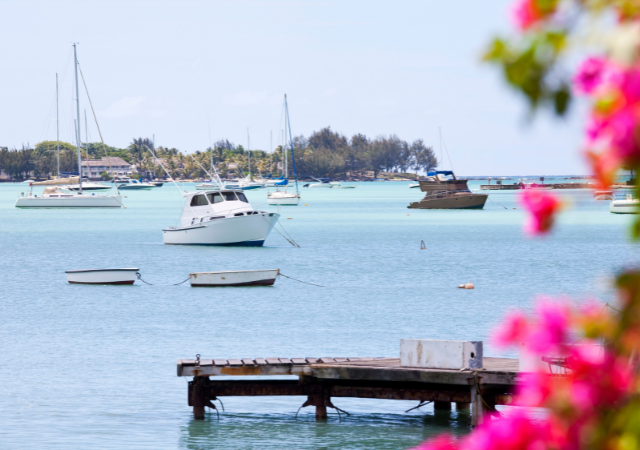
One practical note that holds whatever you decide the best time to visit Mauritius is. Mauritius is small on a map and slow to drive, because the roads run through the towns rather than around them. Le Morne to Cap Malheureux is 75 kilometres and the better part of two hours.
In the wet months that gap widens. Heavy afternoon rain in January or February slows the coast road noticeably and the Port Louis approach can back up badly. If you are booking a transfer or a day tour between December and March, build in more time than the distance suggests, and put the sightseeing in the morning. That holds in whichever month you settle on as the best time to visit Mauritius.
We run fixed price transfers and private day tours in every month including cyclone season, stopping only when a Class 3 warning is issued. Rates for every route are on our Mauritius taxi prices page, and the regional day tours are on our excursions page.
April and October are the best time to visit Mauritius for most people. Both sit between the seasons, so you get warm water, low rainfall, comfortable humidity and none of the December crowding. If you have to pick one, April has the warmer sea and October has the more reliable sunshine.
May, June and September are the cheapest and, on a budget, the best time to visit Mauritius. They fall outside every major school holiday in the UK, France and South Africa, and hotel rates commonly run about a third below the December peak. The weather in all three is dry and bright.
February and March, at around 28 degrees. The coolest is September at about 23.7 degrees, which is still swimmable but noticeably cool for the first minute.
February, followed by January and March. The rain comes as short heavy afternoon showers rather than all day drizzle, and it is much heavier on the central plateau than on the west coast beaches.
Yes, if you have come to walk, sightsee or kitesurf. July is the coolest and one of the driest months, with clear skies and humpback whales offshore. It is a poor choice if your plan is to spend six hours a day in the lagoon.
Not automatically. The season runs November to April and peaks in January and February, but most systems pass well clear of the island. Take insurance that covers weather disruption, leave a day of slack before an onward flight, and follow the official Meteorological Services warnings.
Very. For a European escaping winter it is arguably the best time to visit Mauritius. December to March is the warmest stretch of the Mauritian year with sea temperatures around 28 degrees, which is exactly why it is also the most expensive. October and April give you most of the same weather for less.
Seven is the comfortable minimum whatever you decide the best time to visit Mauritius is if you want beach days and sightseeing. Five works if you are disciplined about grouping attractions by region. Our guide to what to visit in Mauritius sets out what fits into three, five and seven days.
Whatever you decide the best time to visit Mauritius is, someone will be waiting at arrivals with your name on a board and a fixed price agreed before you land. No queue, no meter, no surge in December. We run every day of the year.
See transfer pricesAbout these figures
Air temperature and rainfall figures are long term island averages. Sea temperatures are monthly means for the Mauritius coast from seatemperatures.net. Cyclone warning classes and seasonal forecasts come from the Mauritius Meteorological Services, the island's official weather authority. Hotel pricing patterns are our own observation across the seasons rather than published rates.
READY TO PLAN YOUR TRIP?
Our tours run year-round with hotel pickup included. Whether you visit in the dry season or shoulder months, we have the right tour for you. From €70.
Browse All Tours →