
Places & attractions
Twenty places on this island genuinely earn a day of your holiday, and the honest part most guides leave out is how long each one takes to reach. Every entry below carries a drive time from the airport, a drive time from the main resort areas, and whether you can realistically get there without a car.
Deciding what to visit in Mauritius is not difficult because there is too little to see. It is difficult because the island is small enough that everything looks close on a map and slow enough to drive that nothing quite is. Le Morne and Cap Malheureux are 75 kilometres apart, which sounds like nothing until you have spent two hours of a seven day holiday doing it.
So this guide is ordered by region rather than by how famous each place is. Work through one region at a time and you will see far more than someone crossing the island twice a day. Every entry gives you the drive time from the airport and from the north and west coasts where most hotels sit, because that is the number that actually decides your itinerary.
We drive these routes every day, which is the only reason we can give you those times honestly. Where a place is genuinely reachable by bus, we say so.
If you only have one full day of sightseeing, spend it here. The south west holds the highest concentration of what to visit in Mauritius: the coloured earths, the island’s most photographed mountain, the national park and the sacred lake are all within about forty minutes of each other.
Sand dunes of seven distinct mineral colours that never blend, however much rain falls on them. The site is small and takes about forty minutes, but the ticket also covers the Chamarel Waterfall viewpoint and a giant tortoise enclosure, which is why it works as a half day rather than a stop.
Go before ten or after three. Midday flattens the colours and the light does the whole thing no favours.
A single hundred metre drop into a wooded gorge, viewed from a platform a two minute walk from the car park. It is inside the Seven Coloured Earths site, so you are already paying for it. Most people spend ten minutes here and regret not spending twenty.
The basalt monolith on every postcard of Mauritius, and a UNESCO World Heritage Site for reasons that have nothing to do with the view. Escaped slaves sheltered on its summit, and the story of what happened when abolition finally reached them is the reason it is protected.
The hike to the first viewpoint takes about ninety minutes and is manageable. Beyond that you need a guide and a head for heights. If you are not walking it, the beach at its foot is one of the finest on the island.
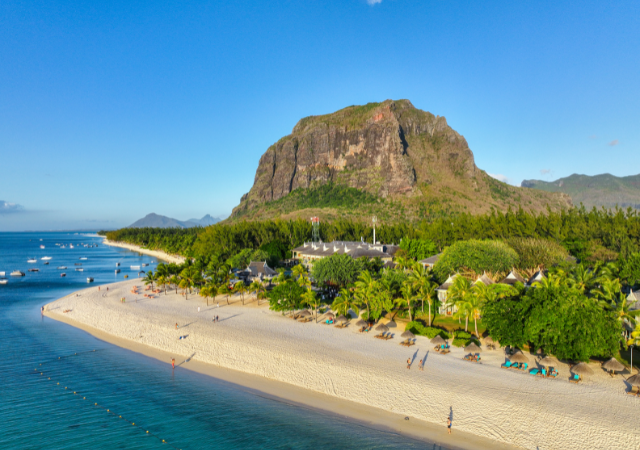
Off the tip of Le Morne, sand and silt pour off the edge of the island’s underwater shelf and, from the air, look exactly like a waterfall running off the seabed. It is an optical illusion, not a real waterfall, and you cannot see it from the ground or from a boat.
Seeing it properly means a helicopter or seaplane flight over Le Morne, typically fifteen to twenty five minutes. It is one of the few genuinely unrepeatable things on this island.
Sixty seven square kilometres of the last native forest left in Mauritius, and the best chance you have of seeing the Mauritius kestrel and pink pigeon in the wild. Entry is free.
The Gorges Viewpoint requires no walking at all and delivers most of the payoff. If you want to walk, the Macchabee Trail is well marked and takes about three hours return.
A crater lake held sacred by Mauritius’s Hindu community, ringed by temples and watched over by a 33 metre statue of Shiva that you will see from the road long before you arrive. During Maha Shivaratri in February or March, hundreds of thousands of pilgrims walk here.
Dress modestly, remove shoes before entering the temples, and do not photograph people at prayer.
The closest region to the airport, which makes it the smartest thing to see on your arrival day or the morning before an evening flight. Wilder and less developed than the coasts most visitors stay on, and the part of what to visit in Mauritius that most itineraries skip entirely.
A protected lagoon with the clearest water on the island and coral you can reach from a glass bottom boat in twenty minutes. Ten minutes from the airport, which makes it the obvious first or last stop of a trip.
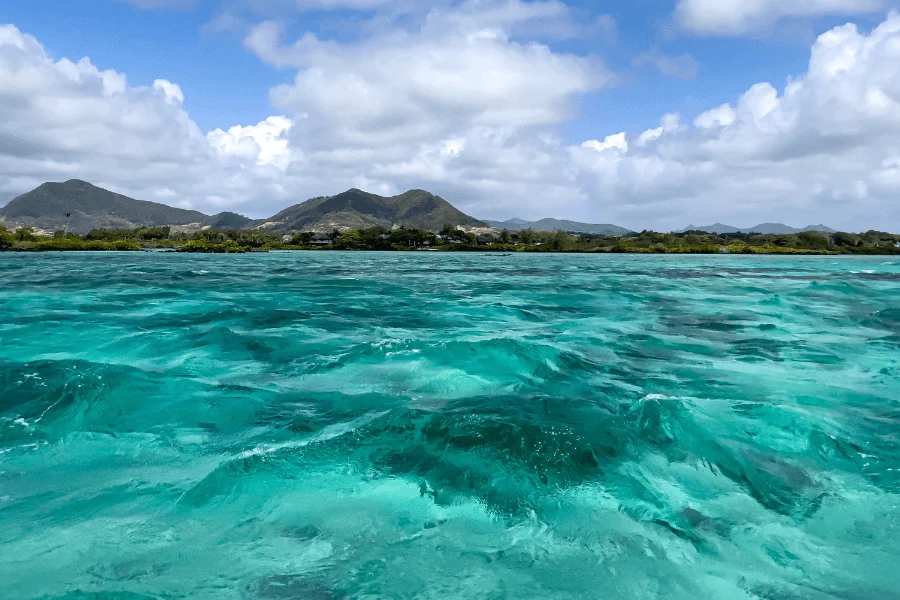
A coral island turned nature reserve, and the only place left where you can walk through the ebony forest that once covered the entire coast. Giant tortoises and pink pigeons live here in a restored habitat. Visits are by guided tour only, booked ahead, leaving from Pointe Jerome.
The old capital, and the most ordinary town on this list in the best sense. The Monday market is a working market rather than a tourist one. The National History Museum is free and covers the naval battle the French won here in 1810, the only French victory inscribed on the Arc de Triomphe.
The one stretch of Mauritius with no protecting reef, where the Indian Ocean hits the cliffs directly. You cannot swim and should not try. It is worth the drive precisely because it looks nothing like the postcard version of this island.
A wide, low waterfall over unusually square basalt columns, reached down a rough track outside Souillac. Local kids jump from the top. Best after rain, unimpressive in a dry September.
Home to one of the largest populations of Aldabra giant tortoises anywhere, plus crocodiles and an insect collection that is far better than it sounds. The best rainy day option in the south and genuinely good with children.
The working capital and the high central plateau. Port Louis is not a beach town and does not pretend to be, which is exactly why a morning there tells you more about Mauritius than a week in a resort. If you want one thing to visit in Mauritius that is not scenery, this is it.
Two floors of fruit, vegetables, spices, textiles and street food in the middle of the capital. Go hungry, take cash, and try a dholl puri from a stall rather than a restaurant. Mornings are best and it winds down by mid afternoon.
The redeveloped harbour front, with shops, restaurants and the Blue Penny Museum, which holds two of the rarest stamps in the world. It is the comfortable, air conditioned counterweight to the market fifteen minutes’ walk away, and the two together make a good half day.

Founded in 1770 and one of the oldest botanical gardens in the southern hemisphere. The giant Victoria amazonica lily pads are the reason most people come and they are worth it. Hire a guide at the gate: without one it is a pleasant park, with one it is a history lesson.

A dormant volcanic crater in the middle of Curepipe, with a road running right around the rim and a view across the whole central plateau. Five minutes of your time, no entry fee, and the best free viewpoint on the island.
Where most of the island’s hotels are, and where the boat trips leave from. If you are staying in the north, these are the things to do in Mauritius you can reach without losing half a day to driving.
An island off the east coast with the sandbars and shallow water that fill most Mauritius brochures. It is busy, and it is busy for a reason. Catamaran trips from Trou d’Eau Douce usually include lunch and a stop at the Grande Riviere Sud Est waterfall.
Go on a weekday if you can. Weekends bring local families and the beach fills.
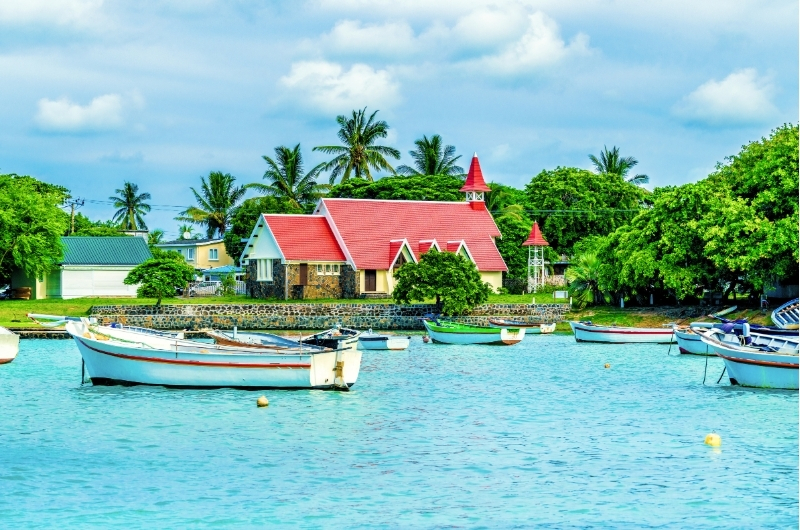
The red roofed church at the island’s northern tip, photographed against Coin de Mire island. The name means Cape of Misfortune, after the British landing of 1810. It takes fifteen minutes and sits naturally on a north coast route.
The north’s main resort town, and the centre of the island’s nightlife, boat charters and shopping. Not somewhere to visit for its own sake if you are staying elsewhere, but the base for most northern boat trips and the easiest place to eat well late.
A chain of seven waterfalls in a gorge above Henrietta, and the most rewarding walk on the island. The full route involves scrambling and swimming and takes four to five hours with a guide, which is not optional here. A shorter viewpoint walk gets you the first two falls in about an hour.

This is the table we wish every guide to what to visit in Mauritius published. Nothing on this island is far in kilometres and almost everything is far in minutes, because the roads run through towns rather than around them. Plan one region per day and these numbers stop mattering.
| Place | Region | From airport | From the north | From the west |
|---|---|---|---|---|
| Chamarel Seven Coloured Earths | The South West | 55 min | 1 hr 40 | 35 min |
| Chamarel Waterfall | The South West | 55 min | 1 hr 40 | 35 min |
| Le Morne Brabant | The South West | 60 min | 1 hr 45 | 30 min |
| The underwater waterfall illusion | The South West | 60 min | 1 hr 45 | 30 min |
| Black River Gorges National Park | The South West | 45 min | 1 hr 30 | 35 min |
| Grand Bassin (Ganga Talao) | The South West | 40 min | 1 hr 25 | 40 min |
| Blue Bay Marine Park | The South and South East | 10 min | 1 hr 20 | 55 min |
| Ile aux Aigrettes | The South and South East | 15 min | 1 hr 25 | 1 hr |
| Mahebourg and its waterfront | The South and South East | 15 min | 1 hr 25 | 55 min |
| Gris Gris and the south coast cliffs | The South and South East | 30 min | 1 hr 40 | 50 min |
| Rochester Falls | The South and South East | 30 min | 1 hr 40 | 50 min |
| La Vanille Nature Park | The South and South East | 30 min | 1 hr 40 | 55 min |
| Central Market, Port Louis | Port Louis and the Centre | 45 min | 50 min | 45 min |
| Caudan Waterfront | Port Louis and the Centre | 45 min | 50 min | 45 min |
| Pamplemousses Botanical Garden | Port Louis and the Centre | 55 min | 30 min | 50 min |
| Trou aux Cerfs | Port Louis and the Centre | 35 min | 1 hr | 40 min |
| Ile aux Cerfs | The East and the North | 45 min | 1 hr | 1 hr 10 |
| Cap Malheureux and the Red Chapel | The East and the North | 1 hr 20 | 15 min | 1 hr 15 |
| Grand Baie | The East and the North | 1 hr 10 | On site | 1 hr 5 |
| Tamarind Falls (Seven Cascades) | The East and the North | 50 min | 1 hr 20 | 25 min |
Swipe to see the full table
A straight answer, based on how long these routes actually take rather than how they look on a map.
Three days. One southern day covering Chamarel, Le Morne and Black River Gorges. One Port Louis morning. One boat day to Ile aux Cerfs or the northern islands. That is the island’s greatest hits and it is a genuinely good trip.
Five days. Add the south east, meaning Blue Bay, Ile aux Aigrettes and Mahebourg, and a walking day at Tamarind Falls. Five days is the point where you stop rushing.
Seven days or more. Add Grand Bassin properly rather than as a drive by stop, a second boat trip, Pamplemousses with a guide, and at least two days where you do nothing but the beach. Most people who come for a fortnight see less than someone here for a week, because they assume there is time later.
Three realistic options, and the honest case for each.
Buses are cheap and cover the coasts and the main towns well. They do not reach Chamarel, the national park, Tamarind Falls or Grand Bassin, they stop running in the early evening, and a cross island journey involves changing in Port Louis or Curepipe. Fine for Port Louis, Mahebourg and the beaches. Not workable for a sightseeing day.
Hiring a car gives you freedom and is the cheapest way to cover a lot of ground over a week. Driving is on the left, the roads are narrow, and finding parking at Chamarel on a Sunday is its own adventure. Our car rental in Mauritius page covers what it costs and what to check before you drive off.
A driver for the day costs more than a hire car and less than most people expect, and it is the only option where nobody in the group has to concentrate on the road. It is also the only one where you can change your mind at eleven o’clock and go somewhere else. Our private day tours follow the regional routes above, and rates for every route are on our Mauritius taxi prices page.
Do not build an itinerary that crosses the island twice in one day. Chamarel in the morning and Cap Malheureux in the afternoon is four hours of driving for two hours of sightseeing. Group by region and you will see twice as much.
Chamarel, for most first time visitors. The Seven Coloured Earths, the waterfall and the tortoise park sit on one ticket, and the surrounding south west holds Le Morne and Black River Gorges within forty minutes.
Three days covers the highlights, five is comfortable, and seven lets you add beach days without cutting sightseeing. The constraint is driving time rather than the number of attractions.
Some of them. Port Louis, Mahebourg, Blue Bay, Pamplemousses, Curepipe and the main beaches are all reachable by bus. Chamarel, Black River Gorges, Grand Bassin and Tamarind Falls are not realistically reachable without a car or a driver.
An optical illusion off Le Morne, where sand pouring off the island’s underwater shelf looks from the air like a waterfall on the seabed. You can only see it from a helicopter or seaplane, not from the ground or a boat.
Yes, and the interior is where the best of what to visit in Mauritius sits. The interior is the part most visitors miss. The national park, the crater lake at Grand Bassin, the tea route and the central plateau look nothing like the coast and take up perhaps three days of a trip.
Black River Gorges National Park, Trou aux Cerfs, Cap Malheureux, Gris Gris, the Port Louis Central Market and every public beach. The National History Museum in Mahebourg is also free.
May to October for walking, the national park and viewpoints, because it is dry and cool. November to April for boat trips and snorkelling, when the sea is warmer. Our best time to visit Mauritius guide breaks it down by month.
Between ten minutes and about ninety. Blue Bay and Mahebourg are closest, the south west is around an hour, and the far north is roughly ninety minutes. The full table is above.
The six places at the top of this guide to what to visit in Mauritius sit within forty minutes of each other, and they are the hardest part of the island to reach by bus. A private south tour covers Chamarel, Le Morne, Black River Gorges and Grand Bassin in a day, with hotel pickup and a driver who knows which order beats the coach parties.
See private day toursAbout these figures
Driving times are our own, measured on these routes in normal traffic, and will stretch in the Port Louis rush hour. Opening hours and entry fees change: check with each site before you travel. Conservation information on Ile aux Aigrettes and Black River Gorges comes from the Mauritian Wildlife Foundation.
READY TO EXPLORE?
We cover every region on this list — north, south, east and west. Private tours with hotel pickup, English-speaking driver, from €70.
Browse Private Day Tours →