
Money & practicalities
Everything worth knowing about the Mauritius rupee before you land: what it is worth today, where to change money without losing 8% to a bad rate, what a beer and a bus fare actually cost, and how much cash you genuinely need.
The Mauritius rupee is the official currency of the Republic of Mauritius. Its currency code is MUR, it is issued by the Bank of Mauritius, and one rupee divides into 100 cents. You will see it written as Rs or MUR on card statements. That is the short answer. The rest of this guide is the part that actually affects your holiday budget: what the Mauritius rupee is worth right now, where the good exchange rates are hiding, and how much cash you should be carrying at any given moment.
Most visitors arrive having done no currency preparation at all, and mostly get away with it. Mauritius is card-friendly in the places tourists spend the most money, and there are ATMs in the arrivals hall. But the gap between handling the Mauritius currency well and handling it badly is worth real money over a two-week trip, comfortably a few hundred euros for a family, and almost all of that gap comes down to three or four decisions you make in the first hour.
What one unit buys in Mauritius rupees
1 EURO
54.6
MUR
1 POUND
63.4
MUR
1 US DOLLAR
46.9
MUR
Mid-market rates, checked 29 August 2026. These move daily and the rate you are offered at a counter is always worse than mid-market. Check the live figure at the Bank of Mauritius before you budget anything important.
The Mauritius rupee has been the country’s currency since 1877, and the modern Mauritius rupee is issued and regulated by the Bank of Mauritius, the central bank established in 1967. It is a free-floating currency, not pegged to the euro, the pound or the dollar, which is why the rate you get in January is not the rate you get in July.
Two practical consequences follow from that. First, there is no fixed conversion to memorise, so a rough mental shortcut is more useful than a precise one. Second, the Mauritius rupee is what currency traders call an exotic, meaning it is barely traded outside Mauritius. That single fact drives most of the advice below, because it is why buying rupees at home is usually a bad idea and why the best rates are on the island.
A shortcut worth learning before you fly: divide by 55 for euros, by 63 for pounds, by 47 for dollars. Round it further if you like. Treating Rs 1,000 as roughly €18, £16 or $21 will keep you oriented in a market without opening an app.
Rates move, so treat every figure here as a snapshot rather than a promise. The table below shows what a common note or amount converts to at the rates checked on 29 August 2026.
| Mauritius rupees | Euro | Pound | US dollar |
|---|---|---|---|
| Rs 100 | €1.83 | £1.58 | $2.13 |
| Rs 500 | €9.16 | £7.89 | $10.67 |
| Rs 1,000 | €18.32 | £15.78 | $21.34 |
| Rs 2,000 | €36.64 | £31.55 | $42.67 |
| Rs 5,000 | €91.61 | £78.89 | $106.69 |
| Rs 10,000 | €183.21 | £157.78 | $213.37 |
Swipe to see the full table
Sterling is worth more than the euro, so a pound always buys more Mauritius rupees than a euro does. If you see a guide quoting fewer rupees per pound than per euro, the figures are wrong and the rest of that page probably is too.
Mauritius rupee banknotes come in seven denominations. The Bank of Mauritius has been converting the series from paper to polymer since 2013, starting with the Rs 25, Rs 50 and Rs 500, adding the Rs 2,000 in 2018 and the Rs 1,000 in late 2024, and completing the set with the Rs 100 and Rs 200 in 2025. Polymer survives a beach bag, a wet swimsuit pocket and a rain shower considerably better than paper, which on this island matters, particularly if you are visiting in the wetter summer months. Coins run from 5 cents up to Rs 20, though anything below Re 1 is close to worthless in practice and you will mostly collect them as change.
| Type | Denominations | Notes for visitors |
|---|---|---|
| Banknotes | Rs 25, 50, 100, 200, 500, 1,000, 2,000 | Rs 2,000 is hard to break in small shops. Ask for Rs 100s and 200s at the ATM if it offers a choice. |
| Coins | 5c, 20c, ½, Re 1, Rs 5, 10, 20 | Useful for bus fares and market change. Cent coins are effectively decorative. |
Swipe to see the full table
The notes carry text in English, Tamil and Bhojpuri on the front and Devanagari, Tamil and Gujarati on the back, a small daily reminder of how many cultures the island is built from. If you like a souvenir that costs face value, a crisp Rs 25 note is a better one than most things in the airport gift shop.
This is where the money is won or lost. The spread between the best and worst way to obtain Mauritius rupees is routinely 6 to 10%, which on a €2,000 spending budget is somewhere between a good dinner and a day trip.
| Method | Typical cost | Verdict |
|---|---|---|
| ATM in Mauritius | Your bank's foreign transaction fee, roughly 1.5 to 3% | Best for most people. Near mid-market rate. Use a card that refunds or waives foreign fees and it is better still. |
| Bank branch (MCB, SBM, Absa) | Modest spread, no commission at most branches | Good rates, but branch hours are short and there is often a queue. Bring your passport. |
| Airport exchange desk | Roughly 3 to 6% spread | Convenient and better than most airports. Fine for a small first amount, poor for your whole budget. |
| Hotel reception | Often 6 to 10% spread | The most expensive routine option. Use it only for a genuinely small top-up. |
| Buying MUR at home | Frequently 8 to 12% spread, if available at all | Avoid. The Mauritius rupee is thinly traded abroad, so margins are punishing and many bureaux do not stock it. |
Swipe to see the full table
The practical sequence that works for almost everyone: withdraw a modest amount of Mauritius rupees from an ATM in the arrivals hall to cover your first day, put hotels, restaurants and tours on a card, and top up at an ATM in town when the cash runs low. You will never need to carry a large amount of the Mauritius currency at once, which is safer as well as cheaper.
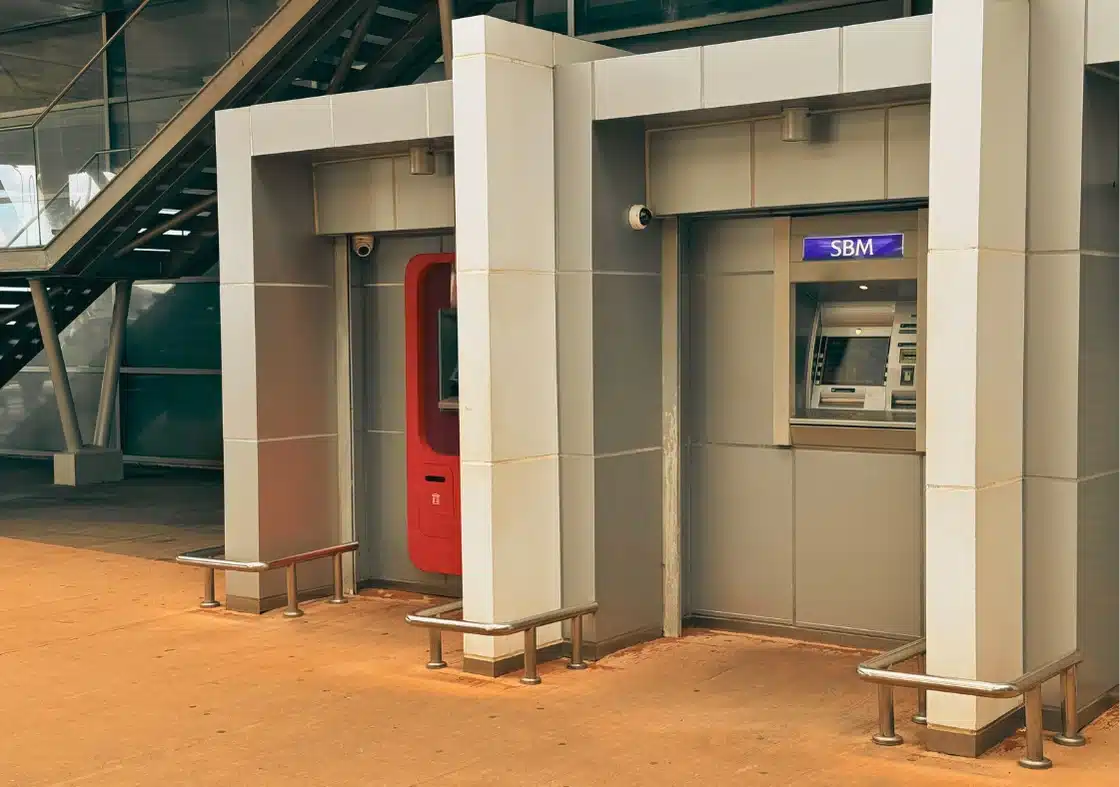
Both, in a specific ratio. Mauritius is more card-friendly than most people expect, but it is not cashless, and the places where cash still rules are exactly the places where a holiday gets interesting.
Visa and Mastercard are accepted almost everywhere that takes cards. American Express is patchier and worth having a backup for. Pack a universal adaptor while you are at it, since Mauritius uses Type G plugs. Tell your bank you are travelling, or expect a fraud block on your first ATM withdrawal, because Mauritius trips a lot of banks’ risk models.
Prices below are typical 2026 ranges rather than fixed figures, and the spread between local and resort pricing is wide enough that both ends are worth knowing. A rum punch that costs Rs 120 in a beach bar in Flic en Flac can be Rs 550 on a hotel terrace three kilometres away.
| Item | Mauritius rupees | Approx. € |
|---|---|---|
| Dholl puri from a street stall (two) | Rs 25 to 50 | €0.50 to 0.90 |
| Bus fare, most journeys | Rs 25 to 50 | €0.50 to 0.90 |
| Bottle of water, supermarket | Rs 25 to 40 | €0.45 to 0.75 |
| Local beer, beach bar | Rs 80 to 150 | €1.50 to 2.75 |
| Local beer, resort bar | Rs 400 to 700 | €7.30 to 12.80 |
| Lunch at a local restaurant | Rs 250 to 500 | €4.60 to 9.20 |
| Dinner, mid-range restaurant | Rs 700 to 1,400 | €12.80 to 25.60 |
| Seafood dinner for two, good restaurant | Rs 2,500 to 4,500 | €45 to 82 |
| Coffee, café | Rs 100 to 180 | €1.80 to 3.30 |
| Museum or garden entry | Rs 200 to 450 | €3.65 to 8.25 |
| Bottle of local rum, supermarket | Rs 350 to 900 | €6.40 to 16.50 |
| Litre of petrol | Rs 70 to 80 | €1.30 to 1.45 |
Swipe to see the full table

The pattern is consistent: anything bought where locals buy it costs a quarter to a fifth of the resort equivalent. You do not have to eat every meal at a street stall to benefit. Simply walking ten minutes off the hotel strip once a day changes the shape of a fortnight’s budget.
Tipping is appreciated but not compulsory, and nobody will chase you down the street. Service charge is sometimes included on restaurant bills, so check before adding more. Tips in Mauritius rupees are always preferred to foreign coins, which are effectively impossible for staff to change.
| Who | Customary | Notes |
|---|---|---|
| Restaurant, no service charge | 5 to 10% | Round up generously rather than calculating precisely |
| Hotel porter | Rs 50 to 100 per bag | In cash, at the point of service |
| Housekeeping | Rs 100 to 200 per day | Leave daily rather than at the end, staff rotate |
| Spa therapist | Rs 150 to 300 | Only if a service charge was not applied |
| Tour or dive guide | Rs 100 to 500 | Depends on group size and day length |
| Taxi or private driver | Round up, or Rs 100 to 200 | Not expected on a pre-paid fixed-price transfer |
Swipe to see the full table
ATMs are widespread in towns, resort areas and at the airport, and they are the cheapest route to Mauritius rupees for most visitors. Four habits keep the cost down.
Dynamic currency conversion is offered at ATMs, in restaurants and in shops, and it always sounds helpful: "would you like to pay in your own currency?" It is never the better deal. Pay in Mauritius rupees, every time.
Excursions are the category where visitors most often get the Mauritius currency question wrong, because the pricing conventions differ from everything else on the island.
Larger operators, meaning catamaran companies, dive centres and the big attractions, generally quote in euros, take cards, and accept online booking. Independent boat owners, taxi drivers arranging a day tour, and small family-run outfits usually quote in Mauritius rupees and want cash at the end of the day. Neither is a warning sign; they are simply different businesses.
Three habits save trouble. Agree the total, the currency and what is included before you set off, ideally by message so there is a record. Carry the cash element in Mauritius rupees rather than assuming euros will be welcome, because paying in foreign notes means accepting whatever informal rate the other person offers. And where a deposit is involved, pay it by card if the option exists, since a card payment leaves a trail that cash does not.
Anything you pre-book from home, transfers included, sidesteps the question entirely. The price is fixed in your own currency before you fly and no Mauritius rupee conversion is involved at any point.
Mauritius operates a VAT refund scheme for visitors, and it is worth knowing about if you are buying anything substantial: jewellery, a model ship, textiles, duty-free spirits.
Refunds are processed at the Mauritius Chamber of Commerce and Industry counter at the airport before you fly. You need to present the goods themselves, the VAT-paid invoice or DF5 voucher, your passport and your travel ticket. That means keeping purchases accessible rather than buried in a checked bag, and keeping every receipt.
Thresholds and rates change, so confirm the current conditions with the Mauritius Revenue Authority before counting on a refund. Allow extra time at the airport if you intend to claim, because the counter is not always quick, and it closes well before the last departures.
Mauritius is a low-crime destination by any reasonable standard and violent robbery of tourists is rare. The realistic risks are mundane: opportunistic theft from an unattended beach bag, and being quietly overcharged.
Split your Mauritius rupees between a day wallet and a hotel safe rather than carrying the week’s cash. Use ATMs attached to bank branches during daylight rather than isolated machines late at night. Our guide to whether Mauritius is safe for tourists covers the wider picture. Check your change in busy markets, where a Rs 500 note handed over in a crowd occasionally comes back as change for Rs 200. And agree taxi fares before getting in, or use a fixed-price operator, since an unmetered fare negotiated at the end of a journey never favours the passenger.
Assuming your accommodation, transfers and major tours are pre-paid, these are realistic daily cash figures per person for the things a card cannot cover.
| Style of trip | Cash per day | What it covers |
|---|---|---|
| All-inclusive resort | Rs 500 to 900 | Tips, a market visit, the occasional drink off-site |
| Half-board hotel | Rs 1,200 to 2,000 | One local meal, snacks, buses, tips, small entry fees |
| Self-catering or guesthouse | Rs 1,800 to 3,000 | Most meals, markets, transport, activities |
| Backpacking | Rs 1,200 to 1,800 | Street food, buses, dorms, entry fees |
Swipe to see the full table
Two weeks half-board for a couple therefore lands somewhere around Rs 35,000 to Rs 55,000 in cash across the whole trip, roughly €640 to €1,000, and you would draw that in four or five ATM visits rather than carrying it.

The one moment people panic about money is the arrivals hall at midnight after eleven hours in the air. It is also the moment you least want to be comparing exchange desks with a tired family and a luggage trolley.
A pre-booked transfer is fixed in euros before you fly, your driver meets you at arrivals, and nothing about the Mauritius rupee exchange rate touches it. You can walk straight past the counters and change money in your own time the next morning, at a better rate, in town.
See fixed transfer ratesThe Mauritius rupee, currency code MUR, issued by the Bank of Mauritius. One rupee is 100 cents, and notes run from Rs 25 to Rs 2,000.
Generally no. The Mauritius rupee is thinly traded outside the country, so exchange margins abroad are typically 8 to 12% and many bureaux do not stock it. Withdraw from an ATM on arrival instead.
Some hotels and tour operators quote and accept euros, but everyday shops, restaurants, markets and buses work in Mauritius rupees. Paying in foreign cash usually means accepting a poor informal rate.
Roughly Rs 5,460 at the mid-market rate on 29 August 2026. The rate you are offered at a counter will be lower, typically by 2 to 6%.
Visa and Mastercard are accepted in hotels, restaurants, supermarkets and shopping centres. American Express is less consistent. Markets, buses, street food and beach vendors are cash only.
Between Rs 500 and Rs 3,000 per person per day depending on whether meals are included. See the table above for realistic figures by trip style.
Amounts above MUR 500,000 or the foreign-currency equivalent must be declared to customs on arrival. Ordinary holiday sums are well below this.
Yes, at the airport before departure, and keeping your exchange receipt makes it simpler. Because the rupee is hard to sell abroad, change it back before you leave rather than after.
Sources and last check
KNOW YOUR COSTS BEFORE YOU ARRIVE
All Taxis Mauritius prices are quoted in euros at a fixed rate. No haggling, no currency confusion. See the full price list for every route.
See Fixed Taxi Rates →